
Unincorporated Association Insurance Means Formation in the U.S.
· 17 min read

Here, “unincorporated association insurance” refers to the legal documentation and formation process behind an Unincorporated Nonprofit Association, not a policy you buy from an insurer. For most individuals, families, and business owners who want privacy and asset protection without the paperwork of a corporation, a properly formed UNA is a viable option. But state law varies, so the right next step is usually a conversation with counsel before you rely on one.
TL;DR:
- A UNA is a flexible, informal legal entity that does not require state filing but can own property and sue in its own name in states that adopt the UUNAA.
- Verification of your state’s adoption of the UUNAA, member minimums, and fundraising registration rules is crucial before relying on a UNA for asset protection.
- Proper drafting of the governing agreement significantly impacts legal protection, governance, and insurance effectiveness for a UNA.
- Insurance coverage for a UNA typically includes general liability, property, and directors and officers policies, but gaps can arise from policy exclusions and activity changes.
- Smaller groups seeking privacy and control benefit most, while larger organizations or those requiring tax exemptions or employee management should consider formal nonprofit or LLC structures.
Table of Contents
- What is an Unincorporated Nonprofit Association under U.S. law?
- How a UNA differs from a nonprofit corporation, trust, and LLC
- State law checklist: what to verify before relying on a UNA
- Benefits and risks: asset protection, privacy, and tax considerations
- Step-by-step practical checklist to form and operate a UNA in the United States
- When a UNA is not the right choice
- Overview of insurance types relevant to unincorporated groups
- Coverage limitations and exclusions to expect
- How a UNA typically approaches obtaining insurance
- Cost factors and approximate price ranges
- Claims handling and common challenges
- Nonprofit-focused insurers versus general insurers
- Why Unincorporated Associations pursue the UNA approach
- How Unincorporated Associations can help you get started
- Sources
- FAQ
What is an Unincorporated Nonprofit Association under U.S. law?
An Unincorporated Nonprofit Association, or UNA, starts with a simple idea: two or more people join together, by agreement, to pursue a common nonprofit purpose. No state filing creates it. No corporate charter defines it. The agreement between members does.
That sounds informal, and in some ways it is. But the Uniform Unincorporated Nonprofit Association Act treats a UNA as a legal entity for specific purposes. It can own property. It can sue or be sued in its own name. It can hold assets separately from its individual members.
What does this mean in practice? A UNA occupies a middle ground. It is not a full corporation with articles filed at the secretary of state’s office, but it is also not just a loose gathering of people with no legal identity. The UUNAA gives it defined capacities for property and litigation while leaving most internal governance questions to the members themselves, through their own written agreement.
How a UNA differs from a nonprofit corporation, trust, and LLC
Ask yourself: what are you actually trying to avoid? For many people considering a UNA, the answer is public filings and ongoing administrative burden. A nonprofit corporation requires articles of incorporation, often annual reports, and a public record that anyone can search. A UNA typically does not.
Governance looks different too. A corporation runs on bylaws and a board structure dictated largely by statute. A UNA runs on whatever agreement its members write, covering membership, voting, and management. That flexibility is a double-edged sword. It gives you control, but it also means the quality of your protection depends entirely on how well that agreement is drafted.
An LLC offers well-tested liability protection for business owners, but it is built for commerce, not for member-based, nonprofit purposes. A trust protects assets differently, through a trustee relationship rather than membership governance. None of these structures is universally better. Each answers a different question about who controls the asset, who is exposed to creditors, and how much becomes public.
State law checklist: what to verify before relying on a UNA
Before you lean on a UNA for asset protection, confirm the ground you are standing on. State law is not uniform here, and the Uniform Unincorporated Nonprofit Association Act is adopted differently from state to state, with some jurisdictions keeping separate statutes for particular kinds of associations.
- Confirm whether your state has adopted the UUNAA or a similar statute, and which optional provisions it kept.
- Check minimum member requirements and whether a statement of association or similar filing is available or required.
- Review your state’s charitable solicitation rules, since fundraising activity can trigger registration even for an unincorporated group.
- Look at how your state limits or preserves member liability in tort claims against the association.
None of this is a one-time check. State legislatures amend these statutes, and what applied when a friend formed a UNA five years ago may not apply to you today.
Benefits and risks: asset protection, privacy, and tax considerations
The appeal is real. A UNA generally files nothing with a public registry, which means your name is not sitting in a searchable state database the way a corporate officer’s would be. That privacy is one of the clearest, most practical benefits.
Because the UUNAA framework lets a UNA own and transfer property in its own name, members can place assets under the association’s control rather than their personal names. That separation is the core of the asset protection argument.
Now the risk side. Tax treatment is not automatic. A UNA does not become tax exempt simply by existing. Federal and state tax rules apply based on the association’s activities and elections, and getting this wrong can create real exposure. According to the Legal Information Institute, nonprofit organizations, including unincorporated associations, are governed primarily by state law, with definitions, exemptions, and tax privileges differing across states.
Governance risk matters just as much. A poorly written member agreement leaves gaps that creditors or disputing members can exploit. Fundraising activity can also draw regulatory attention under state solicitation laws, even for a group with no corporate charter. A UNA rewards careful drafting and punishes shortcuts.
Step-by-step practical checklist to form and operate a UNA in the United States
Forming a UNA is less about filing paperwork and more about building a foundation that holds up under scrutiny. Here is the order that tends to work.
- Draft a written governing agreement covering membership, management authority, voting rules, amendment procedures, and dissolution terms.
- Decide where the association’s principal activities occur, since this can affect which state’s internal-affairs law governs disputes.
- Obtain an EIN from the IRS so the association can open its own bank accounts and be recognized as a distinct entity for financial purposes.
- Title assets, whether real estate, investment accounts, or other property, directly in the UNA’s name rather than a member’s personal name.
- Avoid personal guarantees when the UNA signs contracts, since a guarantee can undo the separation you are trying to build.
- Register for charitable solicitation where your state requires it, based on your fundraising activity.
- Keep minutes and records of major decisions, even informally, so the agreement’s terms are supported by an ongoing paper trail.
- Purchase third-party insurance appropriate to the association’s actual activities where the risk warrants it.
- Schedule a periodic legal review, since state statutes and your own circumstances both change over time.
Pro Tip: Treat the governing agreement as the document that does the real work. The UUNAA gives you a floor, not a ceiling, so the agreement is where your protection actually gets built.
The publisher’s own formation guide walks through these steps in more procedural detail, including naming conventions and recordkeeping habits worth adopting early.
When a UNA is not the right choice
Not every situation fits this structure. If you are planning large-scale fundraising or hiring employees, incorporation and formal nonprofit status usually serve you better, since they come with clearer liability frameworks for that scale.
Heavy third-party contracting, where you need a dependable corporate shield, points toward an LLC or nonprofit corporation instead. And if your goal is 501© tax-exempt recognition or a trust-based estate structure, a UNA alone will not get you there. It is one tool, not the whole toolbox.
Overview of insurance types relevant to unincorporated groups
Even though this guide treats “unincorporated association insurance” as a formation and documentation question rather than a policy purchase, many UNAs still carry actual insurance coverage once they hold property or run activities that create third-party risk.
General liability coverage is the most common starting point, addressing claims from injuries or property damage tied to the association’s events or premises. Directors and officers coverage protects the individuals managing the association from personal claims tied to decisions they make on its behalf, which matters more in a UNA than you might expect, since the statutory liability shield varies by state and is not automatic.
Property coverage protects physical assets the UNA owns or uses, from equipment to rented space. Some associations also carry umbrella policies that extend limits across these categories when their activities carry higher exposure, such as hosting public events or managing shared facilities.
None of this insurance replaces the legal work of forming the UNA correctly. It sits alongside it. A well-drafted governing agreement defines who is exposed and how; insurance decides who pays when something goes wrong anyway. Associations that skip the legal foundation and buy a policy instead often discover the policy cannot fix a governance gap.
Coverage limitations and exclusions to expect
Policies written for unincorporated groups tend to carry the same general exclusions you would see in any small-organization policy, plus a few quirks tied to the entity’s informal status.
Intentional acts by members are almost universally excluded, as is coverage for activities outside the scope described in the application. Volunteer-run associations sometimes discover that a policy assumed paid staff oversight, leaving gaps if the actual operation looks different from what was disclosed.
Because a UNA’s legal capacity depends on state adoption of the UUNAA or a similar statute, insurers may ask pointed questions about how the association is organized before binding coverage. An association operating in a state that has not clearly adopted the act may face more scrutiny or narrower terms, since the insurer has less legal certainty about who can be sued and how liability attaches.
Coverage limits themselves often reflect the association’s stated size and activity level. An association that grows quickly, adds new activities, or starts fundraising more aggressively than its original policy application described risks finding gaps in coverage exactly when it needs it most. Reviewing the policy annually against actual activities is the simplest way to catch this before a claim exposes it.

How a UNA typically approaches obtaining insurance
The starting point is an honest inventory of activities. What does the association actually do: host events, manage property, run programs involving minors, handle donations? Each answer shapes what coverage makes sense.
From there, most associations work through a short sequence: define the scope of activities and assets, estimate the realistic exposure each one creates, then approach insurers or brokers who work with small nonprofit and community groups. Because a UNA’s legal status varies by state, it helps to have the governing agreement and any state filings on hand, since insurers use them to understand who has authority to bind the association and who is exposed personally.

Assessing coverage needs based on risk rather than habit matters more for a UNA than for a large nonprofit corporation, mainly because UNAs tend to be smaller and more informally run, which means a generic policy template often overinsures in one area while leaving a real gap in another. A group running a single annual fundraiser has a different risk profile than one operating a shared community space year-round.
This is also where the legal and insurance tracks intersect. A governing agreement that clearly names who manages the association and how decisions get made gives an insurer something concrete to underwrite against. Vague or missing governance documents tend to slow down the process or narrow the terms offered.
Cost factors and approximate price ranges
Cost depends heavily on activity type, asset value, and claims history, more than on the fact that the group is unincorporated. A small association with no property and infrequent events typically pays less than one running regular public programming or managing a physical space.
Factors that tend to move the price include the number of people the association’s activities regularly bring together, whether the association owns or leases property, whether minors are involved in any programming, and the value of any equipment or assets the policy needs to cover.
Because pricing depends on these variables and on the specific insurer’s underwriting, this guide does not quote a flat number. What matters more than any single figure is matching the coverage to the actual activity, since underinsuring a growing association is a far more common problem than overpaying for one that stayed the same size it was when the policy was written.
Claims handling and common challenges
Filing a claim as a UNA carries a few wrinkles that a corporation rarely faces. The first is proving who has authority to file and negotiate on the association’s behalf, since there is no corporate officer title to point to unless the governing agreement clearly designates one.
The second challenge is documentation. Associations that kept sparse records of decisions, membership, or asset ownership often struggle to substantiate a claim quickly, which can slow settlement. Insurers generally want to see the same governing agreement and activity records that mattered at underwriting, so keeping them current is not just a legal best practice, it directly affects how smoothly a claim moves.
A third issue shows up when the association’s actual activities at the time of a loss differ from what was described when the policy was written. A claim tied to an activity the insurer was never told about can be delayed or denied, which is why the periodic legal and insurance review mentioned earlier in this guide matters beyond just legal housekeeping.
Nonprofit-focused insurers versus general insurers
Some insurers specialize in coverage for small nonprofit and community organizations, while others write policies for unincorporated groups as a small slice of a much broader general liability book. Each has trade-offs worth understanding before you choose.
Nonprofit-focused insurers tend to have underwriters who already understand governance structures like a UNA’s member agreement, which can mean fewer back-and-forth questions and policy language written with volunteer-run organizations in mind. General insurers may offer more competitive pricing or broader availability, particularly in regions where nonprofit-focused carriers have limited presence, but their standard forms are not always built with an unincorporated entity’s informal governance in mind.
The right choice usually comes down to how well either insurer understands the association’s actual structure and activities. An association that can clearly present its governing agreement, EIN, and activity history tends to get better terms from either type of insurer, since the real friction point is uncertainty about who the association is and who speaks for it, not the insurer’s general category.
Why Unincorporated Associations pursue the UNA approach
Unincorporated Associations exists to make this structure accessible without a law firm’s hourly rate attached to every question. The service provides attorney-backed documentation, personalized naming, and lifetime support so members are not left guessing once the paperwork is signed.
The publisher reports a 4.9-star Trustpilot rating from over 330 reviews and states that members have achieved significant collective savings. Treat these as the publisher’s own stated figures. Even with strong support behind you, a UNA is not a substitute for legal advice tailored to your state and situation, and complex cases still warrant a direct conversation with counsel.
— Kirk Carmichael
How Unincorporated Associations can help you get started
If the idea of forming a UNA makes sense for your situation but the drafting and filing feel like more than you want to take on alone, this is exactly the gap the service fills. It handles the documentation so your governing agreement, naming, and asset structure hold up rather than becoming a liability later.

- The Full UNA package covers complete formation and attorney-backed documentation for a one-time fee, ordered directly here.
- An ROE Affidavit is prepared as part of the broader service offering for members who need it.
- A direct attorney consultation is available for readers with state-specific or complex questions before committing.
- Members get lifetime support and a training library rather than a one-time handoff of documents.
This fits people who want the privacy and control a UNA offers without becoming their own legal researcher. Start with the full services overview or book a consultation to talk through your specific situation before you file anything.
Sources
The Uniform Unincorporated Nonprofit Association Act and its prefatory notes explain the act’s intent and limits. State statutes vary, so confirm your state’s adopted version before relying on any provision described here.
- Uniform Unincorporated Nonprofit Association Act (UUNAA) — NCCUSL materials
- Non-profit organizations — Legal Information Institute (Cornell)
FAQ
What is an unincorporated nonprofit association exactly?
A UNA is a group of two or more people joined by agreement to pursue a common nonprofit purpose, without filing to form a corporation. Under the Uniform Unincorporated Nonprofit Association Act, it can own property and sue or be sued in its own name in states that adopt the act.
Does every state treat UNAs the same way?
No. Adoption of the UUNAA and similar statutes varies by state, and some states retain separate rules for specific types of associations. Always confirm your own state’s current statute before relying on a UNA for asset protection.
Is a UNA automatically tax exempt?
No. Tax treatment depends on the association’s activities and the elections it makes, and both federal and state rules apply, as the Legal Information Institute notes for nonprofit organizations generally. A UNA’s informal formation does not create tax exemption on its own.
Does forming a UNA replace the need for insurance?
No. Forming a UNA establishes the legal structure and documentation for the entity, while insurance addresses third-party risk from the association’s actual activities. Many UNAs carry general liability or property coverage separately once they own assets or run public programs.
When should I use an LLC or nonprofit corporation instead of a UNA?
A UNA tends to fit smaller, member-governed groups seeking privacy and simpler administration. Larger fundraising operations, employee-heavy organizations, or groups needing 501© recognition are usually better served by a formal nonprofit corporation or an LLC.
Recommended
- What Is an Unincorporated Association?
- How to Become an Unincorporated Association
- How a Private Unincorporated Association Can Reduce Taxes
This article is provided for general informational and educational purposes only and does not constitute legal, tax, accounting, or financial advice. Reading this content or contacting UnincorporatedAssociations.com does not create an attorney-client, CPA-client, or other professional-client relationship. In accordance with IRS Circular 230, any discussion of federal tax matters herein is not intended or written to be used, and cannot be used, for the purpose of avoiding penalties.
Have questions? Bring them to the daily call.
Join our live Q&A every weekday and Saturday at 3PM PST, or get a free 15-minute call to see whether a UNA fits your situation.
Have a question about your situation?
Send us a message and we'll get back to you.
Keep reading
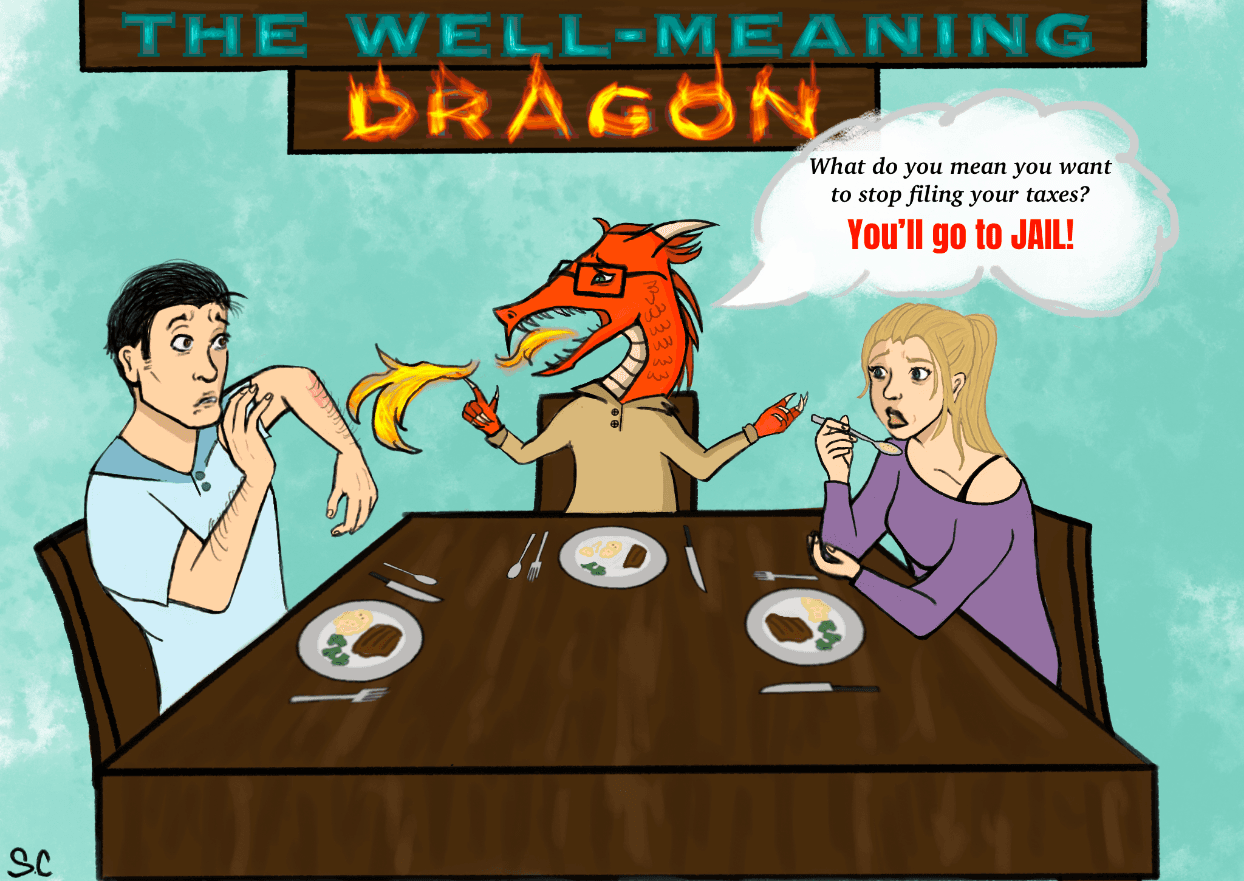 The Well-Meaning Dragon: Straight Answers to the Hardest ObjectionsFor the family and friends who push back because they care — honest answers to the toughest questions about the Federal income tax and Unincorporated Associations.
 It's Not What You Believe, It's What You SignFor the cautious partner in the room: real risk rarely comes from asking questions. It comes from what you signed.
 What Most People Get Wrong About Taxes, Structure, and ControlThe real problem isn't taxes — it's structure, and who actually has control. A look at positioning over loopholes.
Educational, not legal or tax advice. Unincorporated Associations is a document-preparation and education company. Consult a licensed attorney or CPA before acting on any position discussed on this site.