
Member-Managed Association: How Member Governance Works
· 9 min read

A member-managed association is a group run directly by the people who belong to it, with no outside manager and no separate board of officers. Most search results answer this for LLCs, where “member-managed” is a default rule in state law. An unincorporated nonprofit association (UNA) uses the same idea, member-based governance, in a structure that has no public registry and no annual state fee. We set up UNAs, so this guide shows how member management works in an LLC first, then how the same logic works in an association.
TL;DR
- A member-managed LLC is run by its owners. In an association, the members run it under their own governing rules.
- State LLC laws default to member management unless the documents say otherwise, so the choice should be written down.
- Member governance only works well when voting, authority and disagreements are spelled out in a document.
- A UNA gives you member-based governance without a public filing or annual fees. Our full UNA package is $4,950 one-off.
Table of Contents
- What member-managed means in an LLC
- How decisions get made
- The risks of leaving it to the default
- What your governing document should say
- Member governance in an association
- Writing the rules for your members
- Perspective
- Forming your association with us
- FAQ
- Sources
What member-managed means in an LLC
Most people meet the phrase through LLCs, so start there. In a member-managed LLC, the owners (called members) manage the company directly. In a manager-managed LLC, members appoint one or more managers to run it.
The default is member management. Under California Corporations Code §17704.07, an LLC is member-managed unless its articles of organization say otherwise. In that case management is vested in the members, each member has equal management and voting rights, and ordinary-course disagreements are decided by a majority of members. Minnesota’s statute, §322C.0407, follows the same pattern: member-managed unless the operating agreement expressly says manager-managed or board-managed.
The default is not identical everywhere. Arizona’s bar commentary (revised February 2024) notes that Arizona’s act is more detailed than the uniform model. It sorts matters into those a single member may handle and those needing a majority in interest. Your state’s text is the one that counts.

How decisions get made
The practical difference between the two structures is who can act and who must agree.
| Question | Member-managed | Manager-managed |
|---|---|---|
| Who runs daily business? | The members | The appointed managers |
| Ordinary decisions | Majority of members (or majority in interest, by state) | Managers, exclusively |
| Unusual decisions | All members in Minnesota; two-thirds in interest in Connecticut | Members keep consent rights over major actions |
| Who can bind the company? | Members, as agents | Managers |
The Minnesota and Connecticut figures come from Minnesota §322C.0407 and Connecticut General Statutes §34-255f. Connecticut also lets members remove a manager at any time by majority in interest.
In manager-managed companies, the ABA’s LLC agreement checklist notes that members commonly keep approval rights over a sale of substantially all assets, a merger, debt above a set amount, and dissolution.
The risks of leaving it to the default
Defaults fill gaps, but they do not know your group. Three things tend to go wrong.
Everyone can bind the company. In a member-managed structure each member is generally an agent. The State Bar of Texas model agreement makes each member an agent of the company for carrying out its business. That suits a small, trusting group. It is harder with passive participants.
Terminology confusion. The Florida Bar Journal’s 2013 article on Florida’s revised LLC act explains that the old term “managing member” does not make a company manager-managed. It recommends stating the structure expressly. In that act, admitting a new member, amending the documents and dissolving all require unanimous consent.
Pay. Members are generally not entitled to pay for managing. California §17704.07 allows only reasonable compensation for winding up. How owners draw money out is its own planning question, and this guide to payroll and owner draws for a U.S. LLC covers it.

What your governing document should say
Whatever the entity, member governance lives or dies on its document. The Texas Bar’s 2026 practice guide says an agreement should cover voting rights and procedures, management roles and restrictions, which actions need member consent and at what level, transfer restrictions, dispute resolution and winding up. The ABA checklist adds whether management is by all members, specified members or a class, and what standards of conduct apply.
A useful test: could a new member read it and know who can sign a contract, how a tie is broken and how someone leaves? If not, the document is unfinished. Our guide on bylaws versus an operating agreement shows which priorities come first.
Member governance in an association
Here is the question behind the other keyword: how does an LLC’s member governance relate to a membership-based governance structure? An LLC is a state-registered entity that happens to default to member control. An unincorporated nonprofit association starts from membership. Members are the structure. Authority, voting and admission are set in the association’s own governing terms.
That changes several things:
- Privacy. There is no public registry listing owners or managers.
- Cost. No annual state fees, according to our model.
- Fit. Families, coaches, online creators and independent professionals who run programs, communities or shared assets with other people can set rules that match how they actually work.
How members are protected is a separate question. Our article on how RUUNAA protects members from liability covers it. For what stays private, see anonymous business structures. If you are weighing alternatives, LLP vs LLC and partnership vs LLC lay out the tradeoffs.
Writing the rules for your members
If you form an association, treat the governing terms as the core product. Decide these before anyone joins:
- Who is a member, and how people are admitted or removed.
- Who decides ordinary matters, by majority of members or a named group.
- What needs everyone’s consent, such as changing the rules or dissolving.
- Who may sign and spend, and up to what amount.
- How disagreements are resolved.
- What each member contributes and receives.
A written membership agreement puts these answers in nine copy-ready sections. We prepare the association documents with attorney backing, and registration, EIN assignment and customized naming are part of the package.
Perspective
Most people choose a structure by asking what the state will let them file. We think the better question is who should hold authority, and how do you want to write that down?
Member governance is old and simple: people with a shared purpose decide together. The LLC wrapped that idea in public filings, annual fees and default rules that differ in every state. A UNA lets you keep the idea and drop the wrapper.
That is why we pair attorney-backed documents with lifetime support, daily Q&A and a training library. A governing document is only useful if you understand it and can run it. Our members have collectively saved upwards of $7 million, and we hold a 4.9-star Trustpilot rating from over 330 reviews.
Kirk Carmichael
Forming your association with us
Our full UNA package is $4,950 one-off. It includes attorney-backed documentation, state registration, EIN assignment, Revocation of Election preparation, a personalized association name, asset transfer documentation and lifetime support. See the services page for details, or meet with an attorney about your situation first.

If you want the thinking behind the structure, Kirk Carmichael’s book Eliminate Income Tax is $20.
FAQ
Can I change an LLC from member-managed to manager-managed?
Generally yes, by amending the articles or operating agreement to state manager management. Under the statutes above, amending the operating agreement in a member-managed LLC typically needs all members’ consent. Check your state’s filing rules or ask an attorney.
Who is the owner of a member-managed LLC?
The members are the owners, and they also manage. In a manager-managed LLC, owners and managers can be different people.
Is a member-managed association the same as a member-managed LLC?
No. The LLC is a state-registered entity with statutory default rules. An association is organized around its members and its own governing terms, without a public registry.
What does member-managed mean for taxes?
Management style does not set tax treatment. The ABA checklist states that LLCs with two or more members are generally treated as partnerships for federal income tax unless they elect otherwise. A single-member LLC is treated as a sole proprietorship or division of its owner.
Sources
- California Corporations Code §17704.07
- Minnesota Statutes §322C.0407
- Connecticut General Statutes §34-255f
- Arizona LLC Act commentary, February 2024
- ABA LLC Agreement Checklist
- Florida Bar Journal, Florida’s New Revised LLC Act, Part II
- State Bar of Texas model company agreement
- Texas Bar Books Online, LLC Operating Agreements
Recommended
- Nine Copy Ready Sections: Membership Agreement for U.S. Associations
- How to Collect Member Dues: A Practical Guide for Associations
- How to Become an Unincorporated Association
- What Is an Unincorporated Association?
This article is provided for general informational and educational purposes only and does not constitute legal, tax, accounting, or financial advice. Reading this content or contacting UnincorporatedAssociations.com does not create an attorney-client, CPA-client, or other professional-client relationship. In accordance with IRS Circular 230, any discussion of federal tax matters herein is not intended or written to be used, and cannot be used, for the purpose of avoiding penalties.
Have questions? Bring them to the daily call.
Join our live Q&A every weekday and Saturday at 3PM PST, or get a free 15-minute call to see whether a UNA fits your situation.
Have a question about your situation?
Send us a message and we'll get back to you.
Keep reading
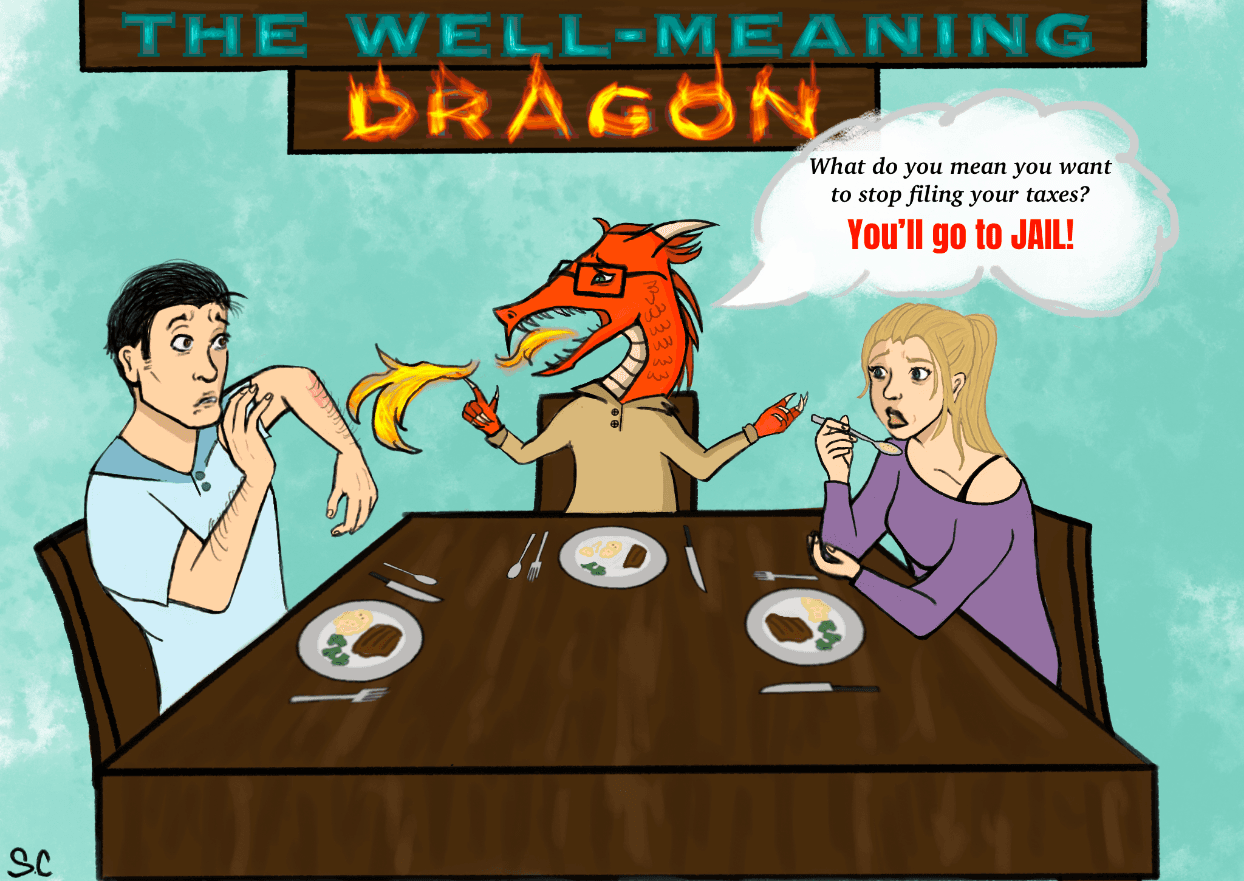 The Well-Meaning Dragon: Straight Answers to the Hardest ObjectionsFor the family and friends who push back because they care — honest answers to the toughest questions about the Federal income tax and Unincorporated Associations.
 It's Not What You Believe, It's What You SignFor the cautious partner in the room: real risk rarely comes from asking questions. It comes from what you signed.
 What Most People Get Wrong About Taxes, Structure, and ControlThe real problem isn't taxes — it's structure, and who actually has control. A look at positioning over loopholes.
Educational, not legal or tax advice. Unincorporated Associations is a document-preparation and education company. Consult a licensed attorney or CPA before acting on any position discussed on this site.