After Aug 11, 2026: Anonymous Business Ownership for U.S. Owners
· 13 min read

Complete public anonymity is rare for U.S. business owners, but meaningful privacy is not. You can shrink your public footprint using a registered agent, a privacy-friendly formation state, trusts, nominee structures, or an Unincorporated Nonprofit Association (UNA), yet banks, courts, and federal regulators can still reach the truth about who owns what. A major FinCEN rule change in 2026 reshaped the landscape, and understanding it is the first step toward choosing the right structure.
TL;DR:
- Since August 11, 2026, domestic companies and U.S. persons no longer file BOI reports, but certain foreign firms registered in the United States still must.
- Delaware, New Mexico, and Wyoming omit member names from formation certificates, but operating elsewhere can trigger foreign registration that reveals ownership details.
- Hire a commercial registered agent before filing; its physical address in the state becomes public instead of your home address.
- Banks still require identification of owners with at least 25% ownership or substantial control, and courts can compel disclosure regardless of entity structure.
- A UNA can suit private governance for family assets or small businesses, but it does not fit ventures needing outside investors or corporate stock.
Table of Contents
- The 2026 FinCEN rules and what states still require
- Structures that reduce your public footprint
- Your step-by-step checklist for legal privacy
- Where privacy ends: subpoenas, banks, and bad-faith shortcuts
- How Unincorporated Associations approaches private ownership
- A grounded take on privacy and responsibility
- Start your UNA with attorney-backed support
- FAQ
- Sources
The 2026 FinCEN rules and what states still require
For years, the Corporate Transparency Act forced millions of small companies to report their owners to the federal government through Beneficial Ownership Information filings. That changed. As of August 11, 2026, FinCEN issued a final rule ending BOI reporting requirements for domestic companies, so U.S.-based entities and U.S. persons are no longer required to file the beneficial ownership reports the Corporate Transparency Act once mandated. Only certain foreign companies registered to do business in the United States still carry that reporting duty.
This is a genuine shift, but it does not mean federal interest in ownership has disappeared. Banks and other regulated institutions still collect beneficial owner information under their own Know Your Customer obligations, so a narrower BOI rule does not translate into anonymity from the institutions you actually do business with.
Who counts as a beneficial owner still matters, even with BOI reporting narrowed. FinCEN’s BOI FAQs define a beneficial owner as anyone who owns or controls at least 25% of a company, or who exercises substantial control over it, such as a senior officer or someone who can appoint board members. That threshold shows up again and again in banking forms, loan applications, and state filings, so it is worth memorizing.
State filings are a separate question from federal reporting. According to SBA guidance on business registration, the requirements vary by state, and the information that becomes public depends on what each state’s formation form asks for.
- Secretary of State filings typically make the registered agent’s name and address public, along with the entity name and formation date.
- Some states require a periodic “statement of information” that lists managers or members by name.
- Internal documents, including operating agreements and membership registries, generally stay private unless a court compels disclosure.
- Obtaining an EIN requires naming a “responsible party,” which the IRS keeps on file but does not publish.
Nearly all states require a registered agent with a physical, in-state address available during business hours to accept legal service, and that address becomes part of the public record the moment you file.
Structures that reduce your public footprint
Once you understand what has to be public and what doesn’t, the real work starts: choosing a structure that keeps your name off the parts that are visible to anyone with an internet connection.
Registered agent services are the simplest privacy tool available to nearly every business owner. Instead of listing your home address as the agent for service of process, you hire a commercial registered agent, and their name and address appear on the public filing instead of yours. The agent still has to maintain a physical address in the state and be reachable during business hours, but none of that identifies you personally.
Formation state choice shapes how much privacy you get from day one. Delaware, New Mexico, and Wyoming are frequently cited as privacy-friendly because their formation documents do not require member or manager names on the public certificate. New Mexico in particular has built a reputation around anonymous LLC formation. The catch is foreign qualification: if you form in Wyoming but actually operate in California, you will likely need to register as a foreign entity there, and that filing can expose the names you were trying to keep private.
Trusts and nominee arrangements add a layer between your name and the public record, but they have real limits. A trust can hold membership interests so that the trust, not you personally, appears on ownership documents. That helps with public exposure, but it does nothing to shield you from a subpoena, a BOI-equivalent request from a foreign jurisdiction, or a court order asking who the trust’s beneficiaries actually are. Nominee arrangements carry similar limits and carry real legal risk if used to deceive rather than simply to organize.
Unincorporated Nonprofit Associations (UNAs) work differently than an LLC or corporation from the ground up. A UNA is a member-based structure, not a stock or membership-interest entity, and it is typically not required to file the kind of public ownership disclosures that LLCs and corporations file in most states. That makes a UNA a meaningful option for owners whose main goal is keeping governance and asset control inside a private, member-run framework rather than a public registry. A UNA fits well for someone consolidating personal assets, family wealth, or a small operating business under a structure built around private governance, though it is not a universal substitute for every LLC or corporate use case, particularly ones that need outside equity investors or standard corporate stock.
Operational privacy measures matter just as much as entity choice. WIPO’s guidance on trade secrets stresses that confidentiality protections only hold up when you take reasonable steps to keep information secret, including signed NDAs, restricted access to sensitive files, and documented internal controls. The best approach separates your records into two buckets: the public-facing filings that a registered agent and state law require, and the private internal governance documents, membership lists, and NDAs that never need to leave your own files.
Pro Tip: Keep your operating agreement, membership registry, and any trust documents in a separate, access-controlled file from anything you’d hand to a bank or regulator. What you never publish, you never have to explain.

Your step-by-step checklist for legal privacy
Privacy works best when you build it in order, not as an afterthought once a filing is already public.
- Define your goal first. Are you protecting against public records searches, business competitors, or potential litigation? The answer shapes which structure actually fits.
- Choose your formation state deliberately. If you operate mainly in one state, weigh whether forming elsewhere actually helps or just adds a foreign qualification requirement that undoes the privacy benefit.
- Hire a commercial registered agent before you file anything, so your home address never touches a public record.
- File your formation documents carefully, checking exactly which fields the state form requires; a Texas Certificate of Formation, for example, asks for organizer and registered agent details but not member names.
- Apply for your EIN and document who you’re naming as the responsible party, since that information stays with the IRS rather than becoming public.
- Draft private governance documents, including an operating agreement, a membership or ownership registry, and trustee documents if a trust is part of the plan. Keep every one of these out of any public filing.
- Prepare for bank onboarding. Expect your bank to request personal identification and ownership percentages regardless of how private your public filings are; this is a KYC requirement, not a choice the bank makes.
- Maintain your records going forward. Update any required state filings promptly, keep your registered agent current, and revisit your structure if your business expands into new states.
- Consult counsel before responding to any legal process. If you’re served with a subpoena or contacted by investigators, get an attorney involved before you say anything about ownership.
Pro Tip: Treat your privacy structure like a maintenance item, not a one-time setup. A missed annual report or an outdated registered agent address can undo years of careful planning.
Where privacy ends: subpoenas, banks, and bad-faith shortcuts
Every privacy structure has a ceiling, and it is important to know exactly where it sits before you rely on one.
Courts and law enforcement can compel disclosure of ownership information regardless of how your entity is structured. A subpoena, a grand jury request, or a federal investigation can reach through an LLC, a trust, or a UNA to identify the people behind it. Privacy from the public is not privacy from a judge.
- Banks collect beneficial owner information under Know Your Customer and anti-money-laundering rules tied to the USA PATRIOT Act, so opening a business account will typically require disclosing who owns and controls the entity.
- Civil litigation can force ownership disclosure through discovery, especially in lawsuits involving contracts, fraud claims, or piercing the corporate veil.
- Asset forfeiture cases have repeatedly unwound opaque ownership structures; Brookings’ analysis of offshore real estate ownership documents how Treasury enforcement tools have exposed hidden owners in high-value transactions.
- Using a nominee to deliberately mislead a bank, a court, or a government agency about who really owns a business can expose you to criminal fraud charges and civil penalties, separate from anything related to the entity itself.
None of the available privacy tools, structural or operational, are designed to defeat a lawful court order. They are designed to keep your name out of casual public searches, not to obstruct a legitimate investigation.
How Unincorporated Associations approaches private ownership
Unincorporated Associations works within this framework by helping people form UNAs built for private, member-based governance rather than public registration. The structure gives members control over shared assets without the public filings, annual fees, or ownership disclosures that typically come with an LLC or corporation, and it resolves several of the friction points that traditional entities create around visibility and ongoing cost.
A UNA can help members safeguard personal or family wealth, operate tax efficiently, and shield assets through its member-governed design. It will not, however, override a valid court order or shield anyone from a federal investigation; no lawful structure does that.
Formation support includes attorney-backed documentation, customizable naming for the association, and lifetime access to educational resources behind it. Clients report significant savings collectively, and the service holds a high rating on review platforms.

A grounded take on privacy and responsibility
Privacy is a legitimate goal, not a loophole. The owners who do this well treat every structural choice as a documented decision, not a shortcut, and they bring in a qualified attorney the moment a situation gets complicated or a letter arrives from a regulator. Build your privacy on paper trails you’d be comfortable explaining, not ones you’re hoping no one ever asks about.
— Kirk Carmichael
Start your UNA with attorney-backed support
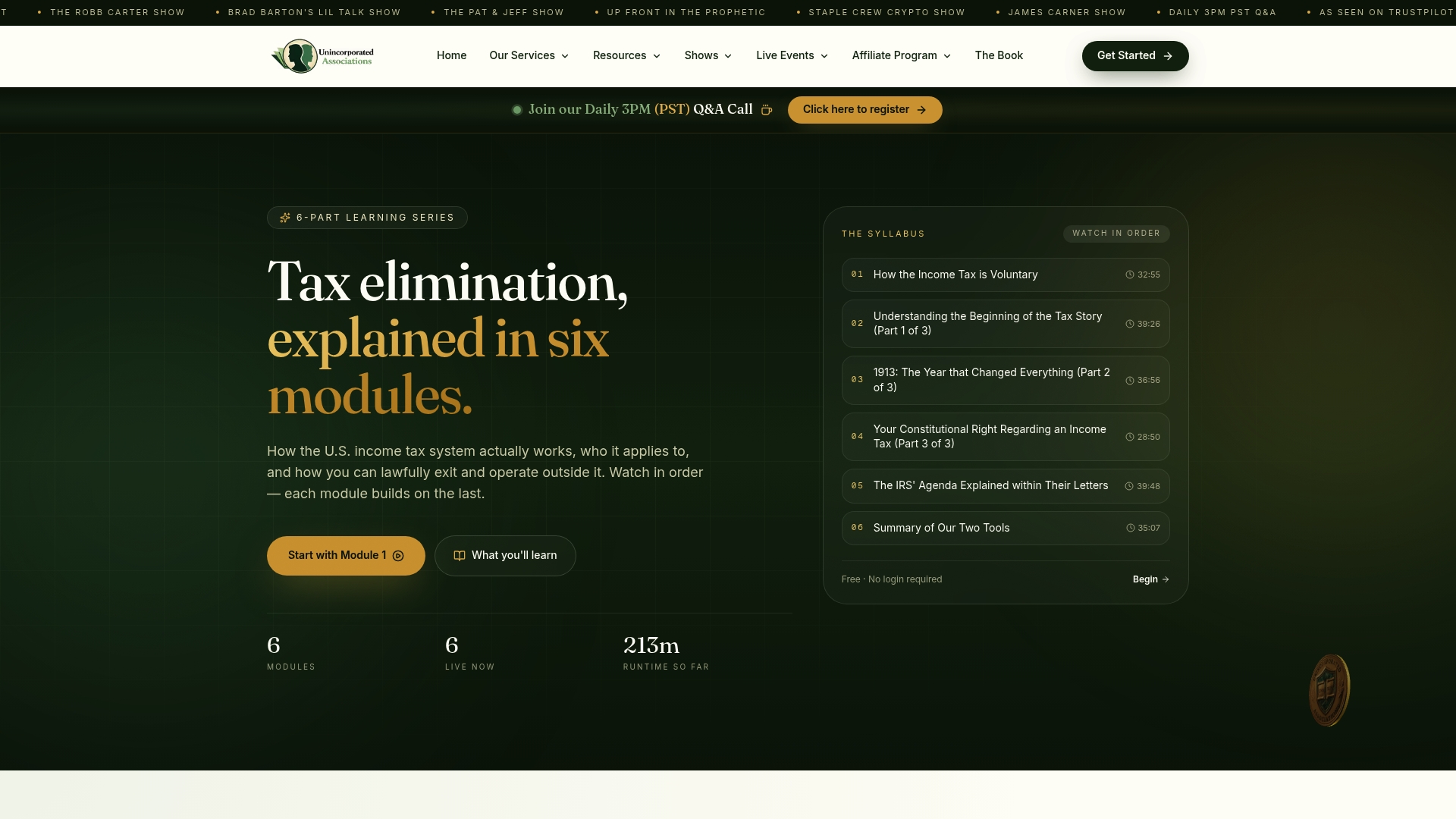
If private, member-based governance fits your goals, our Full UNA package handles the formation work end to end: attorney-backed documents, the Revocation of Election affidavit, EIN assignment, and lifetime support once your association is active.
- Best suited to asset owners, families, and entrepreneurs who want structured privacy rather than a DIY LLC filing.
- Includes personalized naming and ongoing access to our education and Q&A library.
- Priced as a one-time $4,950 package rather than a recurring fee.
This is general information, not legal advice for your specific situation. Order your UNA + ROE package or book a consultation with an attorney to talk through what fits your circumstances. Readers who want hands-on help with ongoing bookkeeping or BOI-related compliance questions may also find this small business guide to beneficial ownership reporting useful as a starting point.
FAQ
Which states allow anonymous LLC formation?
Delaware, New Mexico, and Wyoming are commonly cited as the most privacy-friendly states because their formation certificates do not require listing member or manager names publicly. That privacy can erode if you operate in another state and have to register there as a foreign entity, since that state’s filing requirements may call for ownership details.
Can you stay anonymous as a business owner?
You can keep your name off public filings using a registered agent, a privacy-friendly formation state, or a structure like a UNA, but you cannot stay anonymous from banks, courts, or investigators. Banks collect beneficial owner information under Know Your Customer rules, and courts can compel disclosure through a subpoena regardless of your entity type.
Can the owner of an LLC remain anonymous?
An LLC owner can keep their name off the public formation certificate in privacy-friendly states by using a commercial registered agent, but the 25% ownership or substantial control threshold still applies when a bank, lender, or court asks who controls the company. Public anonymity and legal anonymity are two different things.
Can you hide who owns a business?
You can limit who sees ownership information through lawful tools like registered agents, trusts, or UNAs, but deliberately hiding ownership from a bank, regulator, or court through false statements or nominee abuse can expose you to criminal and civil penalties. The goal should be reducing public exposure, not concealment from anyone with lawful authority to ask.
Do U.S. companies still have to file BOI reports with FinCEN?
As of August 11, 2026, FinCEN’s final rule ended BOI reporting requirements for domestic companies and U.S. persons, so most U.S.-based businesses no longer file these reports. Certain foreign companies registered to do business in the United States still carry that reporting obligation.
Sources
Recommended
- How a Private Unincorporated Association Can Reduce Taxes
- How to Become an Unincorporated Association
- Eliminate Income Tax — Book by Kirk Carmichael
This article is provided for general informational and educational purposes only and does not constitute legal, tax, accounting, or financial advice. Reading this content or contacting UnincorporatedAssociations.com does not create an attorney-client, CPA-client, or other professional-client relationship. In accordance with IRS Circular 230, any discussion of federal tax matters herein is not intended or written to be used, and cannot be used, for the purpose of avoiding penalties.
Have questions? Bring them to the daily call.
Join our live Q&A every weekday and Saturday at 3PM PST, or get a free 15-minute call to see whether a UNA fits your situation.
Have a question about your situation?
Send us a message and we'll get back to you.
Keep reading
 The Well-Meaning Dragon: Straight Answers to the Hardest ObjectionsFor the family and friends who push back because they care — honest answers to the toughest questions about the Federal income tax and Unincorporated Associations.
 It's Not What You Believe, It's What You SignFor the cautious partner in the room: real risk rarely comes from asking questions. It comes from what you signed.
 What Most People Get Wrong About Taxes, Structure, and ControlThe real problem isn't taxes — it's structure, and who actually has control. A look at positioning over loopholes.
Educational, not legal or tax advice. Unincorporated Associations is a document-preparation and education company. Consult a licensed attorney or CPA before acting on any position discussed on this site.